
Choosing Aluminum Track For A Clean Roofline Finish
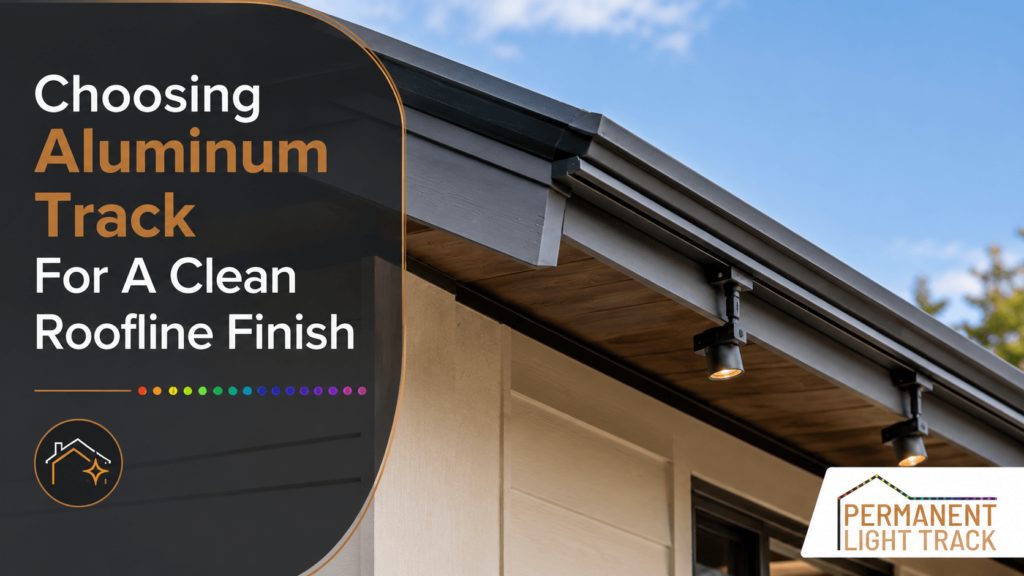
Aluminum track helps turn a collection of permanent roofline components into a clean, organized installation. It provides a defined channel, keeps wiring close to the mounting surface, and creates a more consistent line beneath the soffit or fascia.
Choosing the right track involves more than matching it to a particular system. The profile, dimensions, finish, mounting location, and relationship to the home’s trim all affect how the finished installation looks.
The best aluminum track supports the system securely while blending naturally with the exterior. It should look intentional during the day, maintain straight lines across long roof sections, and fit cleanly around the architectural details of the home.
What Aluminum Track Does
Aluminum track acts as a housing and mounting channel for a permanent roofline system. Instead of leaving individual wires and connection points exposed, the track organizes them along a controlled path.
A properly selected track can help:
- Maintain consistent component spacing
- Keep wiring contained
- Create straighter roofline runs
- Reduce loose or hanging sections
- Protect internal components from direct exposure
- Support cleaner corners and transitions
- Improve the system’s daytime appearance
- Make future inspection more organized
The track does not replace careful installation. Measurements, fastening, drainage, ventilation, and wiring still need to be handled correctly. However, a well-fitted aluminum channel gives the entire project a more finished foundation.
Choose A Track Made For The System
The first consideration is compatibility. Permanent roofline systems differ in component size, wire placement, spacing, connector shape, and mounting requirements.
A track that is too narrow may pinch wires or prevent components from sitting correctly. A track that is too wide may allow movement, create inconsistent alignment, or leave unnecessary gaps.
Before ordering track, confirm:
- Interior channel width
- Channel depth
- Opening size
- Component spacing
- Wire clearance
- Connector clearance
- Mounting-hole placement
- End and corner requirements
- Compatibility with the exact system model
Do not rely only on the brand name. Manufacturers may release multiple versions with different dimensions.
Compare Track Profile And Depth
The track profile determines how far the installation projects from the soffit or mounting surface. A shallow profile may blend more easily with trim, while a deeper channel may provide more room for wiring and connectors.
The best choice depends on the system and the available mounting surface.
| Track Feature | Main Consideration | Possible Effect |
| Shallow profile | Limited internal clearance | More discreet appearance |
| Deeper profile | More room inside the channel | Easier wire organization |
| Narrow opening | Precise component fit | Cleaner, tighter presentation |
| Wider opening | Greater installation tolerance | May reveal more of the system |
| Flat back | Smooth mounting surface | Better contact with soffit |
| Reinforced edges | Added track rigidity | Straighter long runs |
Track should sit flat without rocking or twisting. If the soffit has raised seams or an irregular texture, consider how those details will affect contact along the full length.
Match The Track Finish To The Roofline
Color has a major effect on how visible the track remains when the system is not in use. White aluminum track often blends well with white soffits, light fascia, and common exterior trim.
A darker or contrasting track may stand out against a light soffit, particularly along long horizontal runs. On darker exteriors, a bright white channel may create a visible stripe beneath the roof edge.
Review the home’s:
- Soffit color
- Fascia color
- Gutter finish
- Siding tone
- Roof color
- Window trim
- Porch ceiling
- Exterior accent colors
The track does not always need to match every surrounding material. It should, however, relate closely enough to one major roofline element that it appears integrated rather than separate.
White Aluminum Track
White track is commonly used because many homes have white soffits, fascia, or gutters. It can appear discreet along light trim and may reflect less heat than a dark exterior finish.
White track tends to work especially well with:
- White vinyl soffits
- Light aluminum fascia
- Cream or pale gray trim
- White gutters
- Traditional suburban exteriors
- Farmhouse-style homes with bright trim
The exact shade still matters. A cool bright white track may be more noticeable against aged cream trim, while a warmer white may blend better with off-white exterior materials.
Darker Aluminum Track
A darker track may be suitable for charcoal soffits, black fascia, dark wood tones, or modern homes with deep exterior accents.
Dark finishes can create a clean line when they closely match the mounting surface. However, they may absorb more heat in direct sun, and scratches or exposed cut edges may be easier to notice depending on the finish.
Before using dark track, check how it looks:
- In full daylight
- Under the roof’s shadow
- Next to gutters and downspouts
- Around corners and gables
- Against adjacent siding
- From the street
A color sample viewed indoors may look different when installed beneath an exterior roofline.
Focus On Daytime Appearance
Permanent roofline systems remain visible for far more daytime hours than nighttime hours. The aluminum track should therefore be judged primarily by how it looks when everything is turned off.
Stand at the sidewalk or driveway and look for:
- Long, straight track lines
- Consistent setback from the fascia
- Tight joints
- Clean end points
- Even attachment
- Concealed wiring
- Balanced placement across gables
- Color compatibility with the trim
The track should not sag, wave, or change distance from the roof edge. Even small variations may be noticeable across a long run.
Decide Where The Track Will Be Mounted
Common mounting areas include the soffit, the lower fascia area, or another protected surface beneath the roof edge. Each location changes the visibility, projection, and fastening requirements of the track.
A soffit-mounted track may remain more protected and less noticeable from the street. A fascia-adjacent position may produce a stronger roofline outline but could leave the channel more visible during the day.
Consider:
- The direction the system needs to face
- The distance from the exterior wall
- Soffit width
- Fascia depth
- Gutter placement
- Roof overhang
- Vent locations
- Available fastening points
- Access for installation and maintenance
Choose one reference line and maintain it throughout the most visible sections. Switching repeatedly between fascia-based and wall-based positioning can create an uneven appearance.
Inspect The Mounting Surface
Aluminum track performs best when attached to a stable, relatively even surface. Before installation, check the soffit or trim for damage, loose panels, moisture problems, or areas that cannot support fasteners.
Do not install track over:
- Loose soffit panels
- Rotting wood
- Severely uneven trim
- Blocked ventilation openings
- Active water damage
- Unsecured fascia coverings
- Electrical access points that must remain reachable
Correcting surface problems first helps the track remain straight and securely attached.
Plan For Expansion And Exterior Conditions
Aluminum expands and contracts as exterior temperatures change. Long track runs need to be installed according to the product’s fastening and spacing requirements.
Overtightening every fastener may restrict normal movement or distort the channel. Leaving sections too loose, however, may create gaps, vibration, or visible sagging.
Follow the track manufacturer’s guidance for:
- Fastener spacing
- Joint placement
- End clearance
- Expansion allowance
- Approved fasteners
- Sealants, when applicable
- Cut-edge treatment
- Exterior exposure
The track should also allow water to drain rather than creating a channel where moisture can collect.
Look For Straight, Clean Track Sections
Track rigidity affects the appearance of longer runs. Thin or flexible sections may follow every wave in an uneven soffit, while a more rigid profile can help create a straighter visual line.
Inspect track pieces before installation for:
- Bends
- Dents
- Twisting
- Damaged finishes
- Irregular openings
- Rough cut edges
- Misaligned mounting holes
Store long sections on a flat surface before use. Leaning them against a wall or placing weight on the center may introduce bends that become noticeable after installation.
Plan Cuts Before Installation
Most rooflines require track to be cut around corners, peaks, downspouts, columns, and changes in direction. Clean cuts help sections meet properly and reduce visible gaps.
Measure twice and mark the track clearly before cutting. Use a method appropriate for aluminum and smooth any sharp edges that could damage wiring or create a safety concern.
Avoid creating very short pieces unless the architecture makes them necessary. Small sections may be harder to fasten and can make the roofline look fragmented.
Plan track joints near:
- Less visible side areas
- Flat mounting surfaces
- Accessible service points
- Natural architectural transitions
- Locations away from prominent peaks
Keep Components And Wiring Organized
The aluminum track should provide enough internal space for the intended components and wiring without forcing them into the channel.
Avoid:
- Pinching wires behind track edges
- Crossing wires over fastener locations
- Placing connectors where the cover cannot close
- Stretching wire tightly between components
- Leaving excess wiring bunched in small areas
- Blocking openings needed by the system
Organize the internal layout before fastening the final cover or section. The finished channel should close evenly without bulging.
Choose Track For Govee Systems
For compatible Govee systems, Govee Permanent Light Track can provide a dedicated channel that organizes the system along straight eaves, peaks, gables, and other roofline sections.
Confirm the track is designed for the specific Govee model being used. Component size and spacing may vary between product generations, so compatibility should be checked before placing a full order.
Choose Track For Asahom Systems
For compatible Asahom installations, Asahom Permanent Light Track can help create a more consistent line beneath the soffit while keeping wiring and individual attachment points less exposed.
As with any system-specific track, verify the profile, channel dimensions, and opening placement against the exact Asahom product before installation.
Review Corners, Peaks, And End Points
A long straight run may look clean even with small imperfections, but corners and end points reveal the quality of the track layout.
Check that:
- Corner pieces meet without large gaps
- Angled cuts follow the roofline
- Peak sections remain balanced
- End caps sit securely
- Track does not stop in a random visible location
- Wiring exits remain concealed
- Short returns do not look crowded
These finishing details often determine whether the installation looks custom or improvised.
Compare The Track From Several Distances
Inspect the completed or temporarily positioned track from more than one location.
View it from:
- Directly beneath the soffit
- The front walkway
- The driveway
- Across the street
- Side property lines
- Upper-story windows, when relevant
Close inspection reveals gaps and fastening issues. A wider view shows alignment, symmetry, and how well the track blends with the architecture.
Both perspectives are important.
Final Thoughts On Choosing Aluminum Track
The right aluminum track should match the permanent system, fit the mounting surface, and complement the home’s exterior. Compatibility determines how securely the system sits inside the channel, while profile, color, and placement determine how the installation looks during the day.
Measure the roofline carefully, inspect the soffit or fascia, and plan the cuts before fastening any section. Pay particular attention to long horizontal runs, front-facing gables, corners, and end points.
A clean aluminum track installation does more than hold permanent roofline components. It brings the separate parts together into one orderly, consistent feature that looks planned as part of the home.