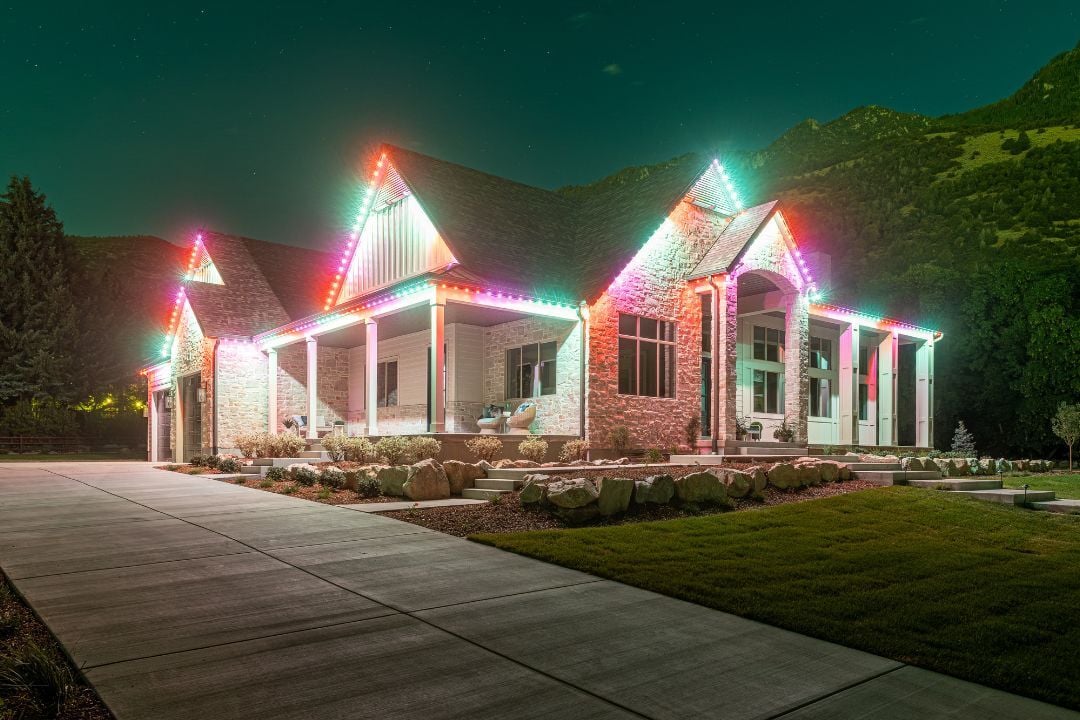
Most outdoor lighting fails for one reason. The hardware looks like an afterthought. Loose cords, uneven spacing, and harsh glare can make a great building look cheaper than it is.
A permanent Christmas light installation fixes that when design leads the work. The right layout disappears in daylight and looks crisp after dark. Colour control then turns the same system into an asset for brand moments and seasonal warmth.
Design Rules That Make A Façade Look Premium
A clean result comes from choices made before the first metre of track goes up. When design is rushed, the outcome looks busy, and the building loses its lines.
These are the design choices that set the tone.
Placement That Hides Hardware
Mount tracks under eaves or along trim where they sit out of sight during the day. A neat install respects the architecture. It keeps attention on the building, not the equipment.
Corners need care. A hard angle with exposed joins stands out. A planned corner detail keeps the line continuous and reduces points of failure.
Spacing That Avoids Harsh Scallops
Uneven distance between nodes creates bright pools and dark gaps. Consistent spacing produces a smooth wash along rooflines and edges.
A simple test helps. View the site from the street at night before finalising placement. That perspective matches how visitors experience the property.
Colour Strategy For Every Event
Colour control is powerful, yet restraint wins. Build a library of approved palettes that suit the brand and the community. Warm white works for everyday use. Soft colours suit charitable campaigns. Bold combinations can fit sport finals or major launches.
Create rules for who can change scenes. Marketing teams often want control. Facilities teams need guardrails. Governance protects brand equity and avoids accidental chaos.
Brightness Balance For Streetscapes
More brightness does not mean better. A balanced output can look premium and reduce complaints from neighbours. Dimmer settings often photograph better, too.
Light pollution matters for councils and communities. A system tuned for the street view can keep the peace and still look impressive.
Installation Practices That Protect The Building
A permanent system touches roofs, power, and exterior finishes. The build needs care, not shortcuts.
Here are the build details that reduce headaches.
Tracks, Clips, And Weather Sealing
Channels protect wiring and keep everything straight. Quality fixings suit the substrate and hold through heat, wind, and rain.
Water management matters at joins. Sealed connectors and proper strain relief prevent intermittent faults that waste time later.
Power Planning And Load Limits
Outdoor power should be designed, not guessed. Confirm circuit capacity and include surge protection where needed. Segment long runs so a fault does not darken the entire frontage.
A tidy electrical plan reduces risk and speeds service calls. It can help insurers and auditors, too.
Data Wiring And Controller Placement
Controllers work best in protected locations with ventilation and access. A secure cabinet beats an exposed box under an eave.
Remote access needs stable connectivity. If Wi-Fi is unreliable, a dedicated network option can reduce dropouts and support multi-site control.
Compliance And Safety
Electrical work must meet local codes and product standards. Document everything. Photos, diagrams, and circuit notes save time when staff change or sites expand.
Safety extends beyond install day. A permanent Christmas light solution should reduce ladder work across the year, not shift risk to maintenance.
Maintenance And Governance For Multi-Site Portfolios
Portfolio owners need consistency. A single site that runs the wrong scene can undo the value created elsewhere.
The following steps keep sites consistent.
Standard Scenes And Schedules
Set core scenes for business-as-usual nights, weekends, and special dates. Lock them into schedules so no one needs to remember to switch modes.
A shared library reduces errors. It gives leadership confidence that sites stay on-brand.
Asset Registers And Remote Checks
Track components, controller locations, and circuit notes in an asset register. Pair that with remote monitoring where available. Early alerts prevent small faults from becoming complaints.
Cleaning And Inspection Cadence
Exterior systems collect dust and insects. A light clean can restore output and keep colours true. Schedule visual checks after storms and during seasonal temperature shifts.
Fast Swap Parts
Keep spare modules on hand for larger portfolios. Quick swaps reduce downtime and avoid extended call-out delays during peak periods.
Why ShawTech Lighting Fits Guest Features And Referrals
Guest posts work best when the advice matches real outcomes. ShawTech Lighting supports that with process, documentation, and a focus on long-term value.
Here is what partners value most.
Documentation That Reads Clearly
Clear install guides, site notes, and scene libraries help teams operate the system without confusion. That reduces service calls and builds trust.
Training For Facilities Teams
A short training session can prevent months of avoidable issues. Teams learn scheduling, brightness control, and basic troubleshooting without guesswork.
Brand-Safe Programming Support
Marketing teams get support for campaigns and community events. Scene planning stays tasteful and aligned with brand standards.
Permanent lighting can look expensive, or it can look like leadership. When the system respects the building and supports governance, it becomes a visible signal of care and quality. ShawTech Lighting helps deliver that result with design discipline and a practical service model that fits real operations.
About the Author